
01
The idea
DropMow explores a service model where robotic lawn care becomes something you use rather than something you have to own, store or maintain.
Robotic lawn care, rethought.
A multilingual website concept for a robotic lawn-care service, designed around clarity, simplicity and a calm Scandinavian visual direction.
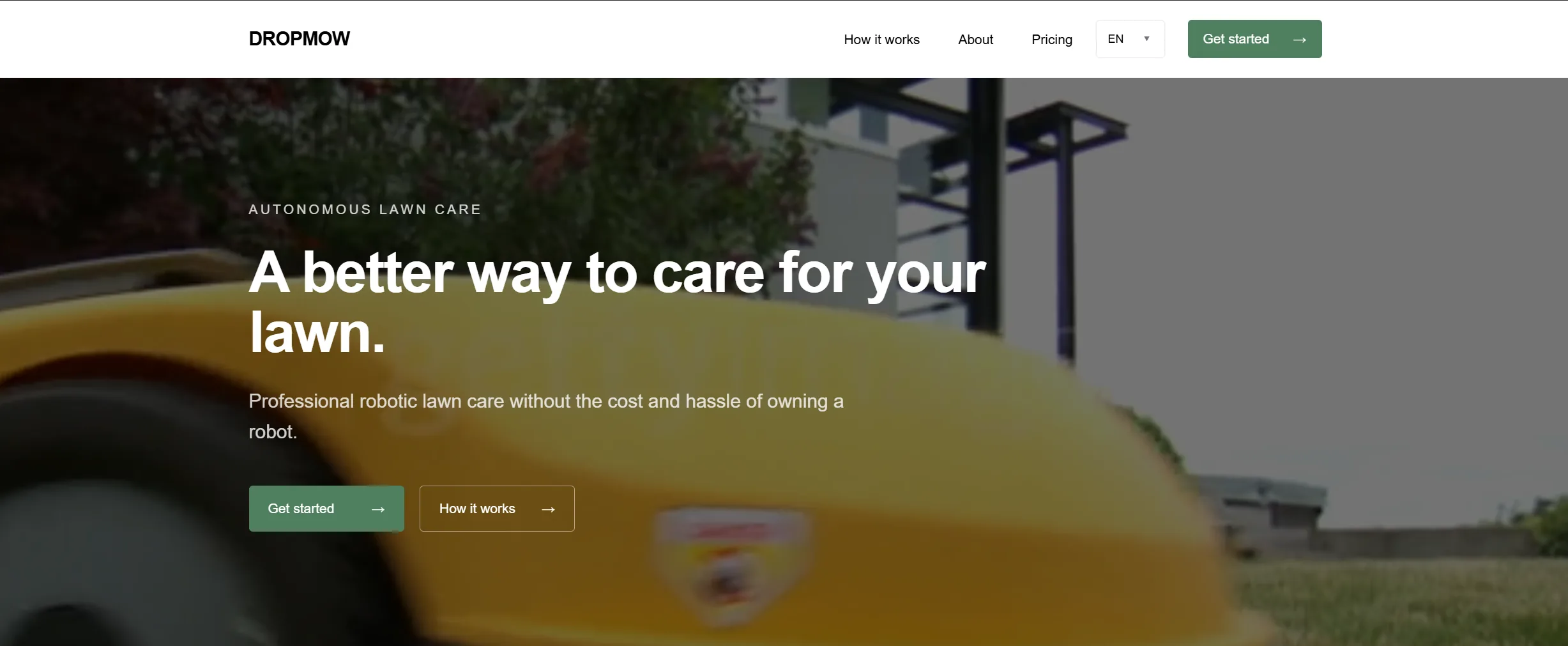
DropMow explores a service model where robotic lawn care becomes something you use rather than something you have to own, store or maintain.
How do you make a relatively technical service feel simple, trustworthy and approachable? The interface needed to explain the idea quickly without overwhelming the visitor with technical detail.
The visual direction is calm, minimal and Scandinavian-inspired. Clear typography, generous space and a restrained interface help keep the focus on the service rather than the technology behind it.
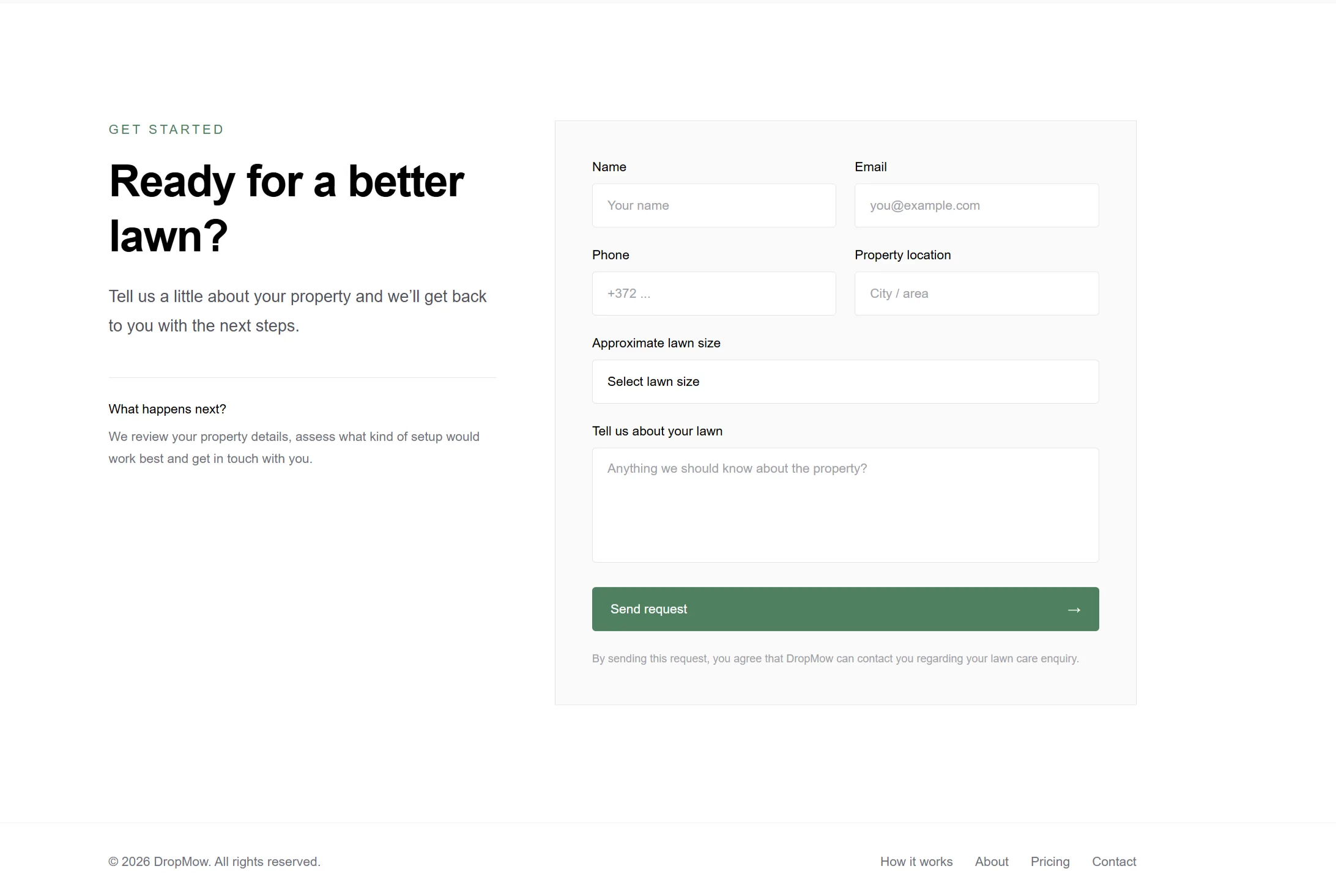
The experience follows a simple path: understand the service, see how it works, explore the pricing and start a conversation. The goal is to remove friction rather than add more information.
The website was built with Next.js, TypeScript and Tailwind CSS, with a focus on responsive behaviour, reusable components, accessibility and a multilingual structure.
We bring the robot to your lawn, set everything up and let it do the work.
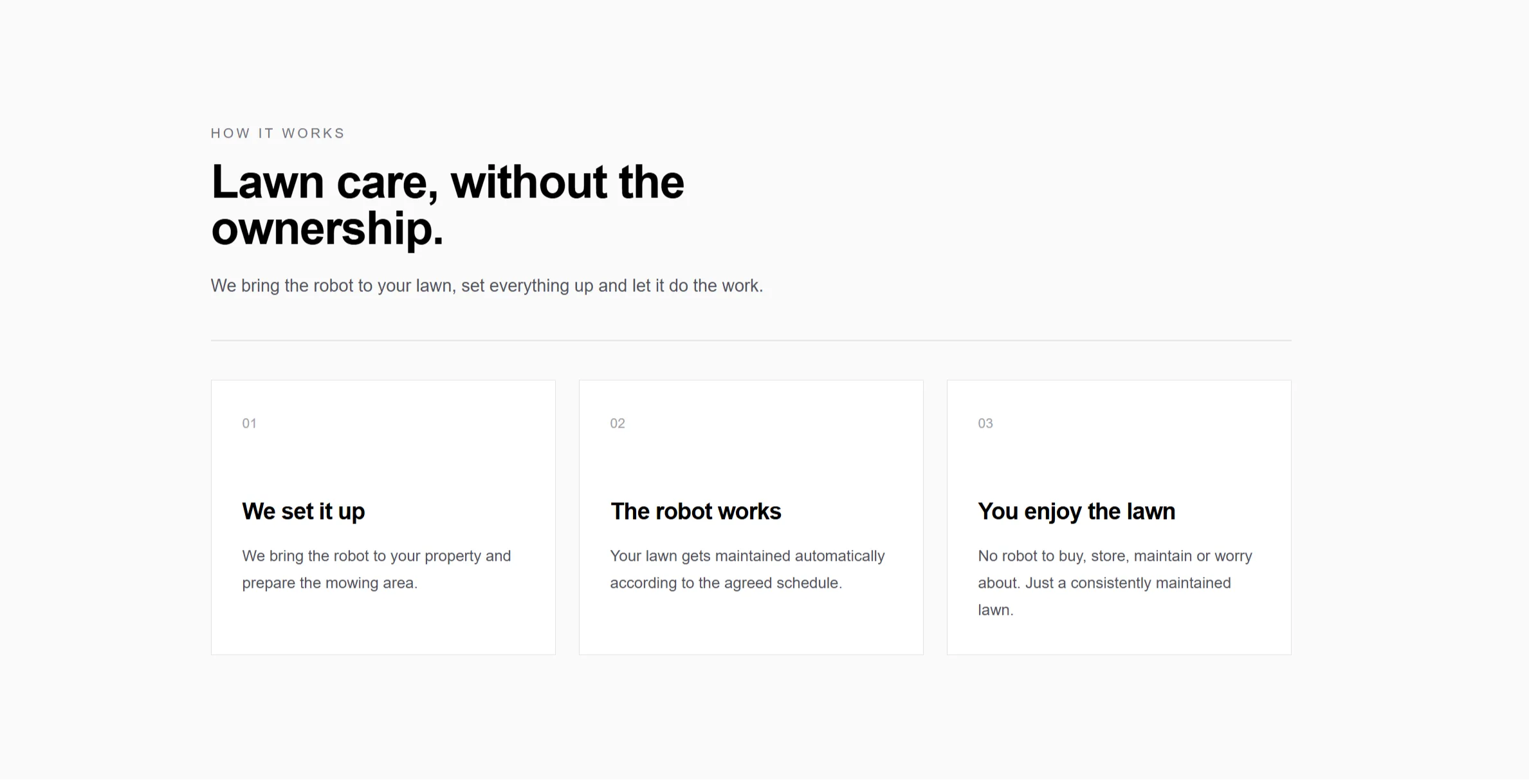
The experience keeps the service understandable from the first interaction through to getting started.
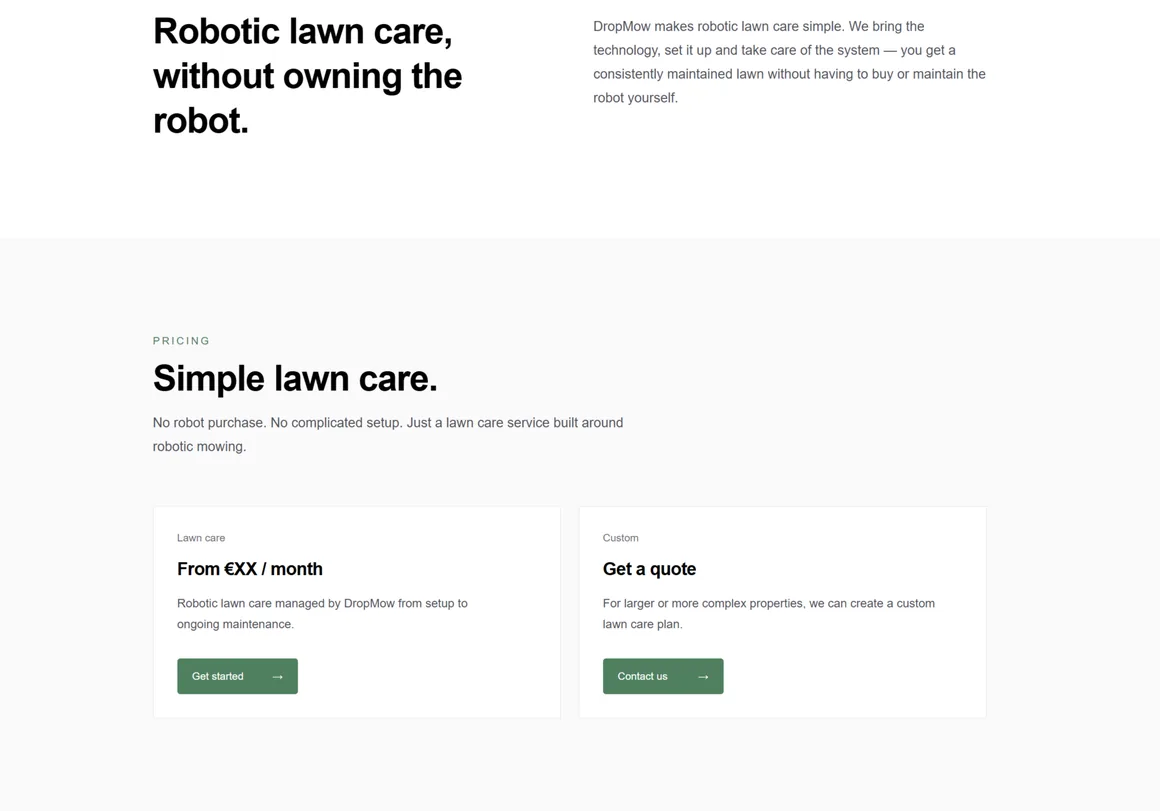
The final experience was designed to work across desktop and mobile while keeping the same visual language throughout.
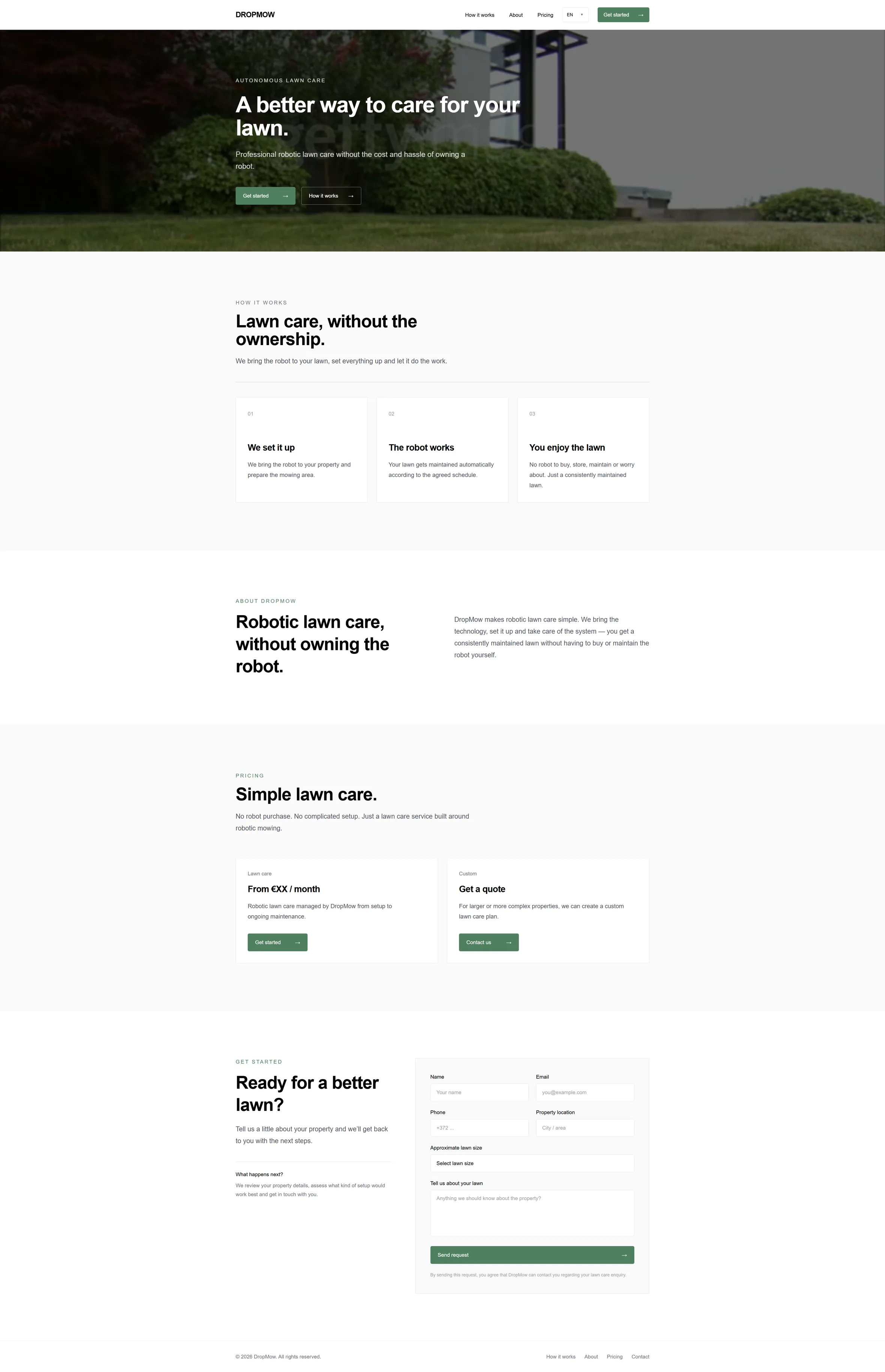
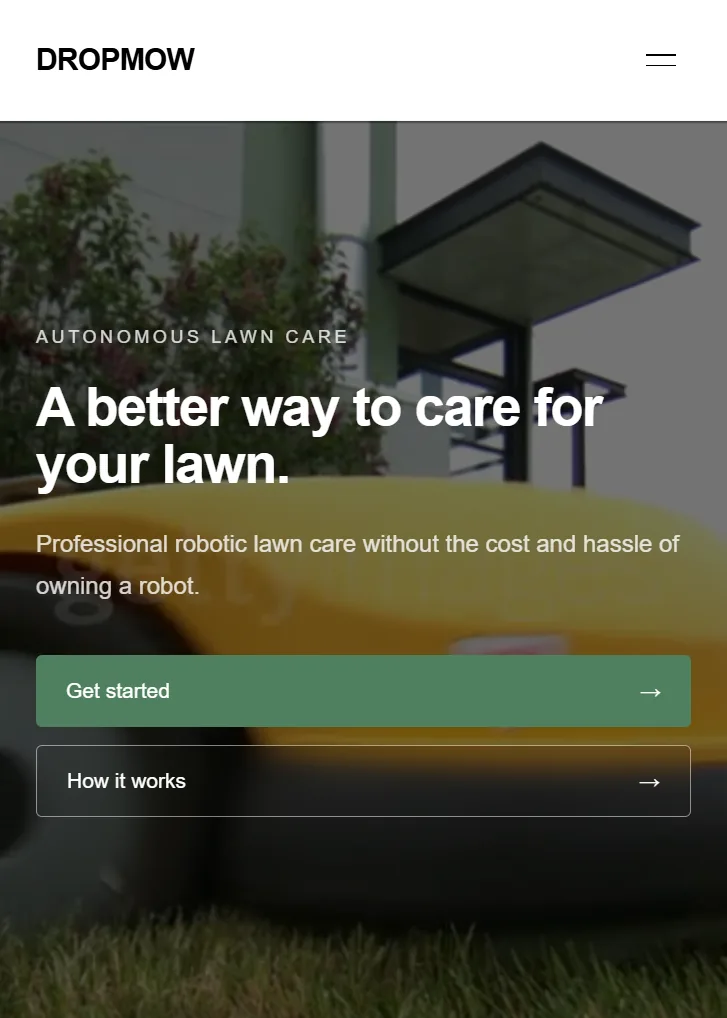
The final step is deliberately simple: tell us about the property and start a conversation.
The next phase would be less about adding features and more about validating the idea in the real world.
Test the concept with real homeowners and understand what would make the service genuinely useful.
Explore pricing, equipment utilisation, maintenance and the operational model behind the service.
Turn the validated concept into a service people can actually book, use and return to throughout the season.
This project started as an exploration of how a relatively technical service could be presented in a simple, human way. The challenge was not to explain every technical detail, but to make the value of the service easy to understand.
You don't need to have everything figured out before starting.
Start a project